![]() |
Welcome to the Web Pages of the Canterbury Society of Model Engineers |
The Canterbury Society of
Model and Experimental Engineers Inc (CSMEE) is for all people in the
Canterbury region who are interested in the design, construction and
operation of models and machines. We are based at Halswell Domain. Come and see for yourself, we would love to see you. Why not become a member or supporter of CSMEE? Click here to check out our Facebook Page. Take advantage of our new Family Membership.
The Club Contact for making a booking for a group to visit our facilities is Peter Grounds Ph 343-1443 (evenings) or John Howie Ph 388-7629.
CSMEE has been listed by The Press as one of the 150 best things about Canterbury. Come and see for yourself!
New Club Rooms are progressing
![]() | ![]() |
A recent Working Bee saw a good turn out of members getting stuck in erecting the Frames for the new verandah and tidying up some of the surrounding area.
Upcoming Events: May Boat Night Tuesday 8 May. Andrews Cres. June General Meeting Tuesday 5 June. Andrews Cres.
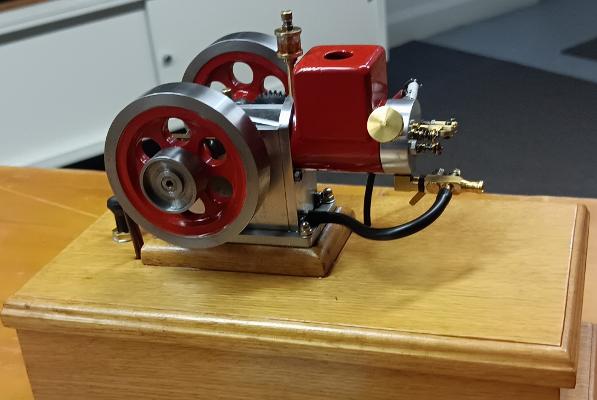
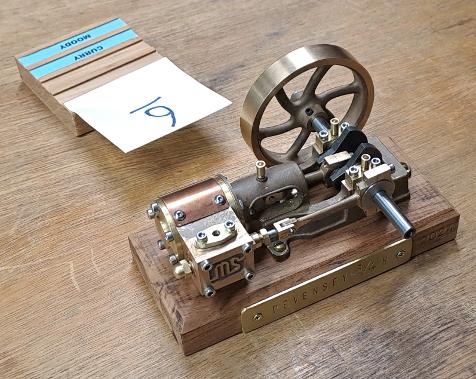
Speaker; Peter Caughey. Peter is a Jet Sprint Ace. Among many titles he was World Superboat Series Champion 2001, 2002, 2008, 2009 and has numerous NZ titles. June Boat Night Tuesday 12 June. Andrews Cres. Regular Events Running Days: Club members are running locos, traction engines, sailing model boats, at our site in the Halswell Domain on Sunday afternoons (1pm - 4pm) throughout the year - subject to weather Follow the signs at the main entrance to the domain - off Halswell Road Special Boat Sailing days are held the 2nd Sunday of each month. Meetings: Currently meetings are still held at our Clubrooms in Andrews Cres, Spreydon First Tuesday of the month - General Meeting often with a guest speaker Second Tuesday of the month - Boat meeting Third Tuesday of the month - Chat night | FEATURE MODEL In the 2011 CSMEE Awards, this model won the Moody Cup for Best Overall Model and the Curry Cup for Best Workmanship in Any Model.
|
FEATURE MODEL Keith Robson has recently completed his fine model of a Baldwin 2-6-2. Keith admits this was an ambitious undertaking, especially when he started in 1988. As a result it sat in the “too hard” bin for a while. The model is Keith’s own effort with details taken from photos and some drawings obtained from NZR archives. The model is 5in gauge. The model is mostly fabricated but wheel castings were done by Win Holdaway in Blenheim. While the original loco was a compound, the model has four HP cylinders arranged to look like compounds. The cylinders have Cast Iron liners and stainless steel pistons with PTFE rings. The pistons valve are also PTFE. The model also features compensated springing on all axles. Three water feed systems are used – axle driven pump, injector and a hand pump in the tender. Some history of the little known Wellington - Manawatu Railway Co is interesting (thanks to Wikipedia where further information can be obtained). By 1879 the government had built the Foxton Branch railway linking Palmerston North and Foxton, and had completed surveys of lines down the west coast to Wellington. Construction of the line was approved, final details of the survey were completed and the first workers for the construction of the line were hired. A short section of the line, from Wellington to Wadestown, was partially constructed. However, the government of the day was defeated at the September 1879 general election. The new government had the line removed from the Public Works Estimates and created a Royal Commission to review the government's public works programme with a view to reducing government expenditure (some things never change). The Commission reviewed the Wellington-Manawatu line in March 1880 and concluded that work should be abandoned! Company Formation: Backed by the Wellington Chamber of Commerce, a group of prominent Wellington businessmen decided in February 1881 to form the Wellington - Manawatu Railway Co (WMR). Maori land owners in the Manawatu exchanged land along the proposed route for shares in the company. In May 1881 the company signed a contract with the government to purchase the land, formation and materials used for building the line so far. In August 1881 the Railways Construction and Land Act was passed, allowing joint-stock companies to build and run private railways, as long as they were built to the government's standard rail gauge of 3' 6" and connected with the government railway lines. The Act had the effect of authorising the WMR's operations. Construction of the line recommenced on 25 September 1882 and was completed on 27 October 1886, with the first through train running on 3 November. Operations: The WMR line ran for about 134 kilometers. From the Thorndon terminus it wound up through the hills to Johnsonville, now the Johnsonville Branch. It then proceeded to Tawa, roughly along the line of the State Highway 1 motorway. From Tawa to Longburn the North Island Main Trunk line generally follows its route. A number of new towns were established along the route, notably Plimmerton, named after company director and "Father of Wellington" John Plimmer, and Levin, named after William Hort Levin, a director of the company. The WMR operated 22 locomotives including two Baldwin compounds (No 5 and No 8) purchased in 1901 from the Baldwin works in Philadelphia. 20 locomotives were ultimately acquired by the government. The WMR classified its locomotives by number without class distinction; if a locomotive was withdrawn its number was re-used on a new locomotive. The WMR was relatively successful, and generated considerable revenue. Its land holdings proved to be a major revenue stream for the company. As sections of the line opened, the land value around it increased and thus the WMR profited from its own operations. The railway's operations were advanced by standards of the time, having comfortable carriages, dining cars, electric lighting, and telephone communication between stations. In comparison, the government-operated network did not introduce dining cars until 1902. Dissolution: The WMR was bought by the government in 1908 and integrated into the New Zealand Railways Department from Monday 7 December 1908. |
|